
Nodusfall Regions and Map
What the trailer and the press kit have actually shown of the mythic continent.
This page is the practical map handbook. There is no official world map as of August 2026 — HoYoverse has not published a region list, fast-travel nodes, or even a confirmed boundary between overworld and instanced arena. What we know comes from the world-premiere trailer, the official HoYoverse press kit on the Mythology Reimagined blog, PC Gamer’s 29 August 2026 roundup, and TechNode’s 28 August 2026 floating-continents report. We will keep this page honest about that.
Use this alongside world and lore for the cosmology layer, and getting started for the first-hour plan. The six biomes below are camera shots, not a confirmed region roster.
Six confirmed biomes
PC Gamer’s roundup listed the environments visible in the trailer: golden hills, fiery skies, dreary moors, misty forests, dusty deserts, and gargantuan canyons. Each appears for at least one cinematic shot and is shot through oil-painting contrast that no current HoYoverse title uses. Treat the set as: there are at least six visually distinct biomes on the launch continent, with at least three of them carrying high-traffic contract arenas.
There is no name table for any of these six yet. When the studio prints one, this page will be the first to inherit the names, then world and lore inherits second, then getting started inherits third.
Floating continents and the Source Core
TechNode’s 28 August 2026 report, drawn from Gamescom demo footage, is the first English text to name the Source Core. The headline cosmology: the world sits on floating continents formed after the shattering of the Source Core. Scattered Elements transformed local ecosystems and granted powers to some creatures and humans. Players explore ruins suspended above a sea of clouds, in TechNode’s wording, to uncover why the Source Core was destroyed.
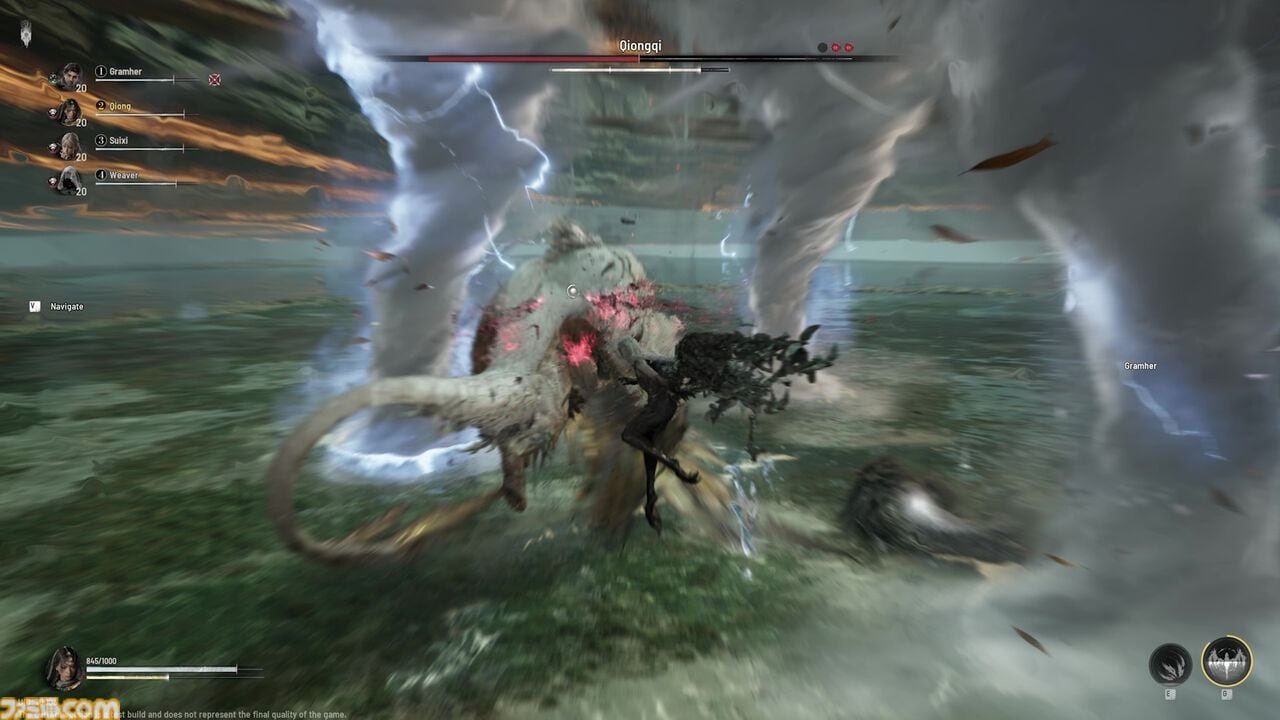
These floating islands are not a backpack gimmick. They are explicitly combat arenas. The same report describes Elemental Links planting energy nodes on giant elemental creatures, then floating platforms and reactive structures players use to reach body parts. Vertical play is part of the loop, not a skybox.
Press translation note: TechNode calls the player class Linker. Official English, Geoff Keighley’s ONL introduction, and the post-Gamescom FAQ all say Weaver. This wiki follows Weaver and treats Linker as a single-outlet translation choice, not a second class.
Why the map is a research map, not a tourism map
The developer FAQ says maps start from real-world research, then get remade as myth. That sentence explains the palette. Golden hills are not a random video-game yellow set; they recall a studied autumn plain with the colour saturation turned up. A cavern battle arena is not a generated dungeon; it is an archaeological layout dressed in light and chain motifs.
The result for a player is that a region is readable. You can tell, by where the safe ground ends, where you are supposed to climb. You can tell, by the silhouettes of the static enemies on the road, which is the contract target and which is a resource pull. This is also why the demo’s Cavern boss reads so clearly in screenshots: the geometry is staged, not noise.
Travel and traversal
Three traversal systems are on the table.
- Mounts. Rideable beasts that move the squad between contract marks. Inven’s Cologne booth had a ground trail toward the mark; the Gamescom press set shows mounts in cliff traversal shots.
- Vertical platforms. Floating and reactive geometry inside combat arenas that double as climb routes during a hunt.
- Divine Beast forms. At least one Divine Skill on the bow kit became a beast-mount. It is awkward in range and sits on Ultimate-tier cooldowns; the preview players wasted it on trash.
There is no fast-travel system in published copy. If a beta adds one, this page will record the rule on the day the launcher tells you.
Regions versus contracts
A contract is a hunt. A region is the geography a contract sits inside. In the demo, contracts sent you through a single region to a marked target. There was no evidence of free-form open-world roaming between hunts. Famitsu and Inven both described the loop as: accept the contract, ride to the mark, fight a phased encounter, return with materials.
If launch keeps that loop, the regions are effectively long arenas with traversal between them. If launch goes Genshin-scale, the regions become home to free exploration. Do not assume one or the other from the trailer.
What is missing from this page
There is no named region list, no name list, no compass, no map icon for contract boards, no atmospheric-only versus contract-only separation, no day-night preview, and no weather preview per biome. There is no Genshin-style element chart per region either. The published copy does not include any of that.
When a beta, a roadmap, or an official bestiary ships with the first batch of names, this page is where the new words go first. The other region pages inherit them after. Until then, treat this as the labelled-cupboard page: biomes in, names out.
Frequently Asked Questions
Quick answers to the most common Nodusfall questions.
Is Nodusfall an open world?
Demo loops used contracts plus rides to marks. The studio has only confirmed distinct regions; an open-world free-roam has not been shown as the launch structure.
How many regions are in the game?
At least six visually distinct biomes. HoYoverse has not named any of them, so the count of launch regions is unannounced.
What is the Source Core?
A cosmological break named in TechNode's Gamescom report. The world is floating continents suspended over a sea of clouds after the Source Core shattered. Official English still leads with Weaver and Dreadnodi, not this noun.
Are Weavers the same as Linkers?
No. Weavers is the official English class name. Linker is a single-outlet translation of the same word in TechNode's report. The wiki uses Weaver consistently.