
Nodusfall Contracts and Hunts
From the hub notice board to the final Dreadnodi reward.
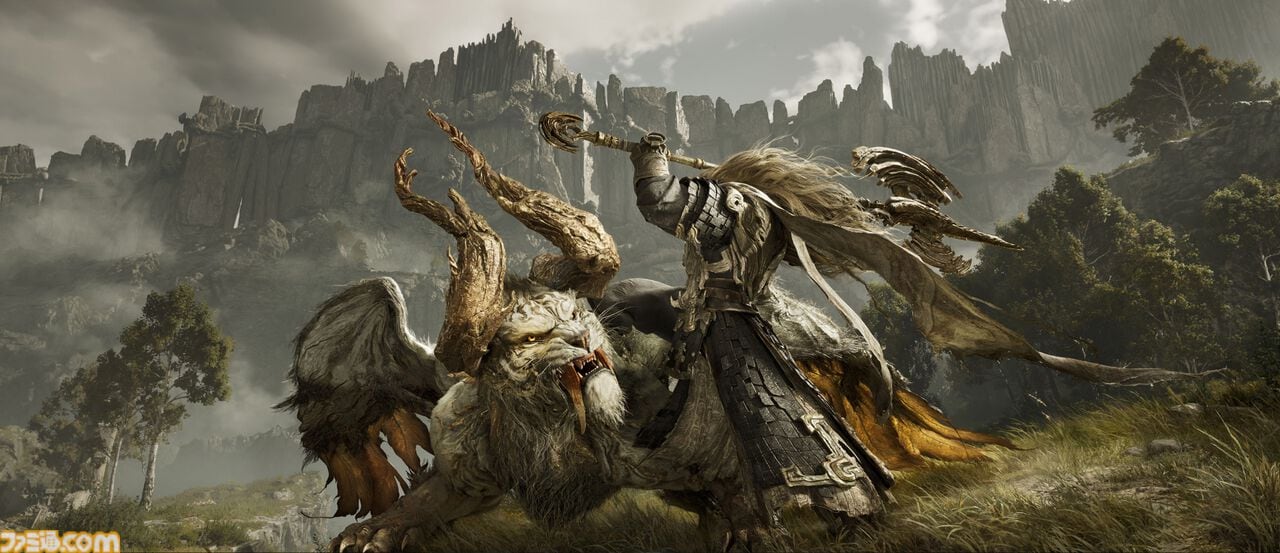
A contract is the published route from the player hub to a Dreadnodi hunt. It is more than a menu that unlocks a boss: the structure shown in preview footage gives the group a target, a destination, a boss sequence, and a reason to return to the hub with what the fight produced. Because Nodusfall remains in pre-release testing, however, the important distinction is between what reporters watched and what a future build may formalise. There is no public contract catalogue, rank-threshold table, or guaranteed reward list yet.
The clearest account comes from Inven. Its hands-on group accepted work at a notice board, mounted a rideable beast, followed a visible trail across the ground, and arrived at a marked creature. 4Gamer and GameRant showed the same broad structure from different angles: the hub is preparation space, the journey is traversal, and the contract resolves in a scored fight against a giant target. TechNode also describes contracts as a central way to enter hunts rather than as random encounters encountered simply by wandering.
Start at the hub notice board
The notice board should be treated as the contract lobby, not as incidental scenery. The group gathers there, identifies the destination, and turns an otherwise open road into a shared objective. GameRant’s preview describes a chain of three boss encounters selected for the test, while its other coverage follows a party from the board into combat. That supports a practical rule for a four-player lobby: settle the route before anyone mounts. Once the ride begins, revising the plan is slower and more confusing for everyone.
A useful pre-mount checklist is short. Confirm the target, assign a lead rider, name the first clash player, choose who watches the flanks, and agree on a simple call such as join, reset, or fall back. The contract’s difficulty will determine how much of that preparation can be improvised, but a target name and a recovery plan are always worth agreeing on.
The hub NPC who operates the board has not been officially named, and no public source assigns the board a faction, rank, or story voice. It is accurate to call the operator the hub’s board NPC. It is not yet accurate to invent a guild, client, or lore title for that character. See world and lore for the small amount of setting detail the studio has confirmed.
The mount ride and the ground trail
After the contract is accepted, the party leaves the hub on a rideable mount. This is the traversal leg of the loop. The mount is not just a fast-loading animation: the press footage places it between preparation and the arena, giving the contract a visible route and giving the party time to arrive with a common direction of travel.
Inven specifically noted the ground trail leading to the objective. Its purpose may be navigation, a boundary, or a visual signal for the contract route, but the safe practical takeaway is that players can follow it to the target instead of hunting for a spawn pin. The trail is a better landmark than a guessed map coordinate. No reliable public map, exact region list, or fast-travel rule should be invented around it yet.
Mounts also create a natural assignment opportunity. The lead rider can follow the trail and control pace; the second rider can watch the group; ranged Weavers can mentally prepare the first approach; the melee or clash-oriented player can identify the first safe point from which to engage. If the party dismounts in different places, stop briefly and regroup. A clean arrival is worth more than a few lost seconds.
The journey may also expose the difference between a contract and free roaming. Roaming lets a player explore, test traversal, observe the environment, or gather incidental materials. A contract gives that movement a destination and turns arrival into a committed combat event. Free play is not shown as the same scoring run, and the press coverage does not establish that roaming bosses grant the same contract rewards. The current beta sign-up video is useful context, but it should not be treated as a complete reward specification.
Chained bosses and escalating pressure
GameRant’s 29 August hands-on followed a three-boss chain: Cleaver Fellstone, Qionqi, and Maldrake with its armored rider. The exact order and labels are preview-side material and may change in the release client, but the structure is the practical lesson. A chain is a stamina test across encounters, not three isolated checks. Cooldowns, healing resources, mounted traversal, and attention all carry forward.
Use the first encounter to establish the group rhythm. A tank or clash-capable Weaver should learn the timing, a support player should learn where the party can safely recover, and the damage players should learn when the boss is vulnerable to an Elemental Link. Do not spend every long-cooldown Divine Skill on the first beast merely because it looks like the final challenge. Hold at least one major response for a phase change in a later encounter.
Inven’s separate reporting on the test space says a party could finish a contract in roughly twenty minutes for an S rank while another took more than thirty and received a C. Those observations show that completion and evaluation are not the same thing. They do not publish a universal timer, scoring formula, or reward tier. Test players should record their time, party size, deaths, and number of restarts, but should not write community measurements into the wiki as official rules.
The chain also explains why the first target can affect the third. A group that ignores revives or wastes a Divine on a small add may reach the final boss with less health, fewer resources, and weaker timing. Conversely, a group that uses basic attacks and clash well in the opening fight can preserve enough pressure to reach the execution window later. For examples of the enemy silhouettes and the limits of their preview names, see the Dreadnodi bestiary.
Difficulty and party-size scaling
Inven’s reporting implies that contract difficulty rises across the chain or changes the burden on the squad, while the developer’s broader combat description has players keep pressure until a vulnerability appears. Public reporting does not provide numerical health, defence, stagger, or timer multipliers, so this guide will not present invented scaling values. Difficulty is better understood as a coordination problem: more dangerous contracts ask the party to preserve resources, assign roles, and respect environmental telegraphs while pursuing the same break-and-finish rhythm.
Party size changes the social contract. A solo player controls the full route, every recovery decision, and every skill. A four-player party can split clash, ranged pressure, support, and target control, but it also needs communication. A group of four damage Weavers may have more personal output while lacking a stable answer to a heavy hit. A group of four tanks may survive individual pressure while failing to produce a weakness quickly enough. Neither composition is automatically unviable in every future build, but each is risky if nobody owns a distinct job.
Scaling may also affect the number of targets or the frequency of threatening events, not merely the health bar. A dragon and rider need different people to control different threats. A group that enters with one plan for the dragon and no plan for the rider is already behind the contract. Assign target order before the first clash: primary, secondary, and add. The full verbs are explained in co-op combat.
The return: drops and divine materials
The contract returns value to the hunt loop through the materials and power taken from Dreadnodi. Official homepage copy ties defeating creatures to forging, building, and evolving, and describes Divine power as something reclaimed from enemies. TechNode’s coverage similarly connects the hunt loop to progression materials, while Inven and GameRant describe rewards and boss-driven character growth in the demo context.
At present, the public material supports a useful category split: ordinary drops may come from the creatures and materials encountered on the road, while major hunts provide relic or progression materials and Divine power. It does not support a complete table assigning a guaranteed item to a specific boss. Until a beta publishes a result screen, label every drop as observed, possible, or unconfirmed. Do not turn a trailer prop into a farm route.
When the party returns to the hub, use the information from the run. Record which target fell, what environmental elements mattered, whether an Elemental Link shortened the encounter, and how many Divine Skills were available. That record is more useful than chasing a supposed S-rank drop because it helps the next contract. The next target will test whether the group learned the system rather than merely survived one lucky execution.
Practical contract cycle
- Read the board and state the target or chain.
- Assign a lead rider, clash seat, ranged pressure, and support responsibility.
- Mount together, follow the ground trail, and regroup at the destination.
- Establish roles against the first enemy and preserve long cooldowns.
- Use environmental Elemental Links and communicate the next join execution.
- Revive deliberately; a delayed recovery is better than repeated deaths.
- Return to the hub, inspect observed materials, and update the party record.
This is the honest pre-release contract system: a board-driven objective, a ride through the world, a deliberate hunt, and a return that feeds progression. HoYoverse may rename the board, formalise scaling, or publish a full contract list after testing. The method above is designed to survive those changes because it follows the parts multiple outlets independently described: the hub, the trail, the target, the chain, the reward loop, and the preparation required to make four players act like one squad.
Frequently Asked Questions
Quick answers to the most common Nodusfall questions.
Where do Nodusfall contracts start?
Preview footage and Inven's report place them on a notice board in the player hub. The board operator has not received an official public name.
Do contracts require a mount ride?
The tested structure accepted a contract, mounted rideable beasts, and followed a ground trail to the target. Future navigation options are not yet public.
Do contract rewards include Divine materials?
Major Dreadnodi kills feed forging, build growth, and Divine power according to official copy and TechNode's report. Exact drop tables are not published.
Is free roaming the same as a contract?
No confirmed parity exists. Free roaming is open movement and observation, while a contract provides a marked destination, a hunt objective, and a return to progression.