
Nodusfall Elemental Links
Plant, detonate, and turn the arena into part of the hunt.
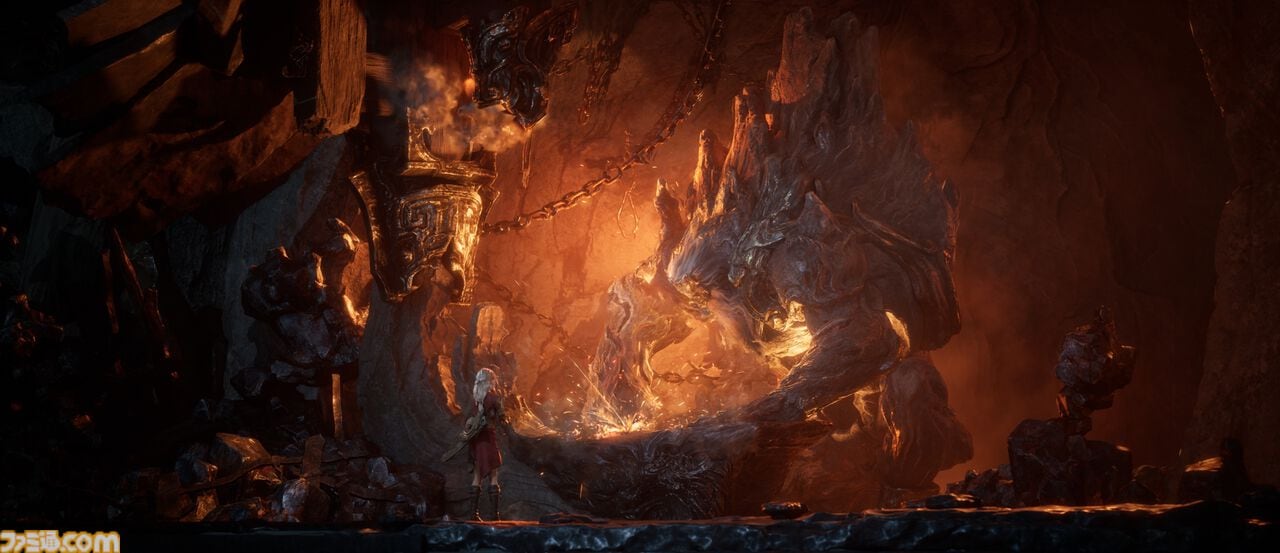
Elemental Links are Nodusfall’s name for the system’s cooperation between elemental attacks, energy nodes, giant creatures, and the world around them. The public description is consistent across the August 2026 press pile, but it is not a complete skill encyclopedia. TechNode’s 28 August report says different weapons and attacks can plant energy nodes on giant elemental creatures, while a squad detonates or exploits them together. Famitsu adds the important second layer: the environment reacts, so lanterns, chains, ice pillars, and other structures can become part of the encounter rather than static decoration.
This page is deliberately grounded in those reports. The game is still in pre-release, and the footage does not establish a full link chart, exact cooldown on every planting action, or final skill names. We will describe the confirmed loop, the kinds of decisions a group must make, and the questions future beta players can answer without pretending that speculation is a rule.
What a node actually does
A node is an elemental marker created by an attack under the right conditions. In a hunt, a node is not a reason to ignore the boss and stare at a status icon. It is a temporary objective that tells the squad where pressure matters and how the next opening can be made. On a giant beast, the node may direct attention to a body part, a weak point, or a phase transition. On the arena, a reactive element can turn a hazard into a tool.
The exact visual and timing rules may change between tests. The reliable planning principle is to identify where the node was planted, tell the squad what it is attached to, and decide who will detonate it. A ranged Weaver may see the first node, a melee player may be in position to follow up, and a support player may need to protect the group before the group spends its major cooldowns. The node therefore coordinates target order as much as it adds damage.
Do not infer a complete elemental wheel from one node. The press material does not publish every link type, every counter, or a resistance table. If a future test displays a new type, record its icon, triggering weapon, target, and result before naming it. Until then, use neutral terms such as energy node, detonation, and environmental element.
Planting on giant beasts
Giant beasts create the clearest reason to use Elemental Links. A party’s basic attacks can pressure a creature while selected weapons or skills plant a node on it. The body is large enough that “hit the boss” is not a sufficient instruction. Different elevations, wings, shoulders, legs, or chained parts may offer different opportunities. TechNode specifically describes floating structures that let players reach parts of a target, and 4Gamer’s gameplay frame shows the party engaging a large creature across a multi-level arena.
Before planting, look for three things: a safe route to the target, a clear view of the next telegraph, and a party plan for the node’s detonation. Ranged pressure can create a node from distance; a clash player can protect the approach; a flexible member can move to a flank or secondary target. The group should not all stack on the same body part merely because the first player found a glowing marker.
A planted node should also change the party’s next decision. If it is on a reachable weak point, the squad may prepare a short execution. If it is on a nonessential limb, the group may need to control that limb or use the environment to make the approach safer. If it is placed during a dangerous phase, support may need to preserve recovery before the party attempts a detonation. These are testable tactical interpretations, not official rules about hidden health multipliers.
The node is therefore a timing device. The party is building a shared opening while still moving and surviving. A player who plants it and then runs away is giving the group a signal without helping to cash it. The party should treat planting as the first half of a two-step action.
Squad detonation rules
The phrase “detonate together” is the most important confirmed cooperation rule. TechNode describes a squad detonating or exploiting the nodes together, and the public combat overview says players continue pressure until a vulnerability appears. A safe detonation sequence is simple:
- The planter calls the target and identifies the node.
- The party checks that the immediate telegraph has ended.
- Clash or frontline players establish a safe angle.
- Ranged players stop spreading damage across the wrong areas.
- The group detonates on the same agreed cue.
- The party immediately reassigns primary, secondary, and support positions.
The phrase “same cue” matters. A group that detonates as soon as one player reaches the node may spend the opportunity before the other players arrive. A group that waits for every possible player may lose the window. The best default is a short count or one clear call: link in three. If the party is inexperienced, one detonation is better than four independent attempts.
Detonation does not end the hunt. It creates another decision point. The resulting opening may lead into a party execution, a damage phase, a stagger, or a changed arena state depending on the build. Treat the first result as a new phase, not as a victory screen. The party’s next target and recovery plan should be ready before the effect resolves.
There is no published evidence that every node is consumed by one detonation, that two identical nodes stack in a special way, or that a particular order of elements produces a universal combo. Test players should record whether a node disappears, changes, or leaves a residual effect. Those observations can refine the wiki without turning an early build quirk into a permanent rule.
The environment is a second link layer
Famitsu’s environment-reactivity description is a warning to stop treating a Nodusfall arena as a flat room. Lanterns can mark routes or vertical opportunities. Chains can suggest a target, a climb, or a destructible or reactive structure. Ice pillars can create cover, alter movement, or provide a surface that an elemental attack can exploit. The press material establishes reactivity, not a complete catalogue of every object and every result.
Environmental elements should be read in context. A lantern near a body part may be a landmark, a weak-point marker, or a traversal aid. A chain crossing the arena may be a physical obstacle, a clue to the creature’s state, or an interaction point. An ice pillar may be temporary cover or a surface for a later link. The correct response is to approach it as a question, interact only when the party is safe, and avoid assuming that one observed reaction applies to every pillar.
Use the environment to create room. A group can split around a pillar so one player is not caught in every area attack, use elevation to reach a body part, or follow a chain to understand where the encounter is moving. This is why hunt Dreadnodi pairs naturally with the Link system: the boss is the source of pressure, but the arena determines how players reach and spend pressure.
The environment also punishes greed. A player who chases a reactive object while the boss begins a swing may be too far from the clash seat or revive point. Call link when the object is safe to approach; call off when the party needs to clear an attack. Good environmental play is not collecting every interaction. It is using one safe interaction to improve the next team action.
Planting cooldowns and test discipline
The phrase “cooldowns on planting” is one of the most likely areas for misinformation. The public press descriptions confirm that regular skills and attacks have cooldown-driven timing, and that planting occurs through attacks, but they do not provide a single global planting cooldown. A skill that creates a node may have a different recovery, cost, or availability from a basic attack. The node itself may also impose its own short timing rule.
Players should track the triggering action rather than guessing. Write down whether the node came from a light attack, a charged attack, a regular skill, or a demonstrated elemental interaction. Record the time until the squad could plant again and whether the second planting replaced, extended, or simply added to the first. This produces useful feedback for a future verified guide without inventing a cooldown number.
The same discipline applies to link types. A test may show one kind of elemental marker on a beast and another kind of environmental reaction, but the press pile does not establish a formal type hierarchy. Use descriptive labels only when the client provides a visible name. Do not name a move after a colour, number, or imagined element if the source does not identify it.
A safe Elemental Links checklist
Before the fight, the party should agree on the node call, the detonation count, and the target after detonation. During the fight, the planter should announce the body part and confirm that the party is clear. The frontline should protect the detonation angle. Ranged pressure should be redirected rather than blindly continued. Support should keep recovery available for the phase that follows.
When the party wipes, ask what failed: the node was not reached, the detonation was mistimed, the environment was unsafe, or the party spent too many resources on the attempt. That diagnosis is more useful than arguing about which player did the most damage. It also keeps the discussion tied to the systems that can be verified.
Elemental Links make Nodusfall’s co-op premise tangible. A player plants a signal, the group converges on it, and the arena contributes another layer to the opening. The final skill list and timing numbers will be settled by testing. Until then, the grounded rule is to plant with purpose, detonate together, react to the environment safely, and report new evidence precisely.
Frequently Asked Questions
Quick answers to the most common Nodusfall questions.
What is an Elemental Link in Nodusfall?
It is an elemental energy node planted on a target or through an environmental interaction, which the squad can detonate or exploit together. A full type chart is not public.
Can nodes be planted on a giant beast?
Yes. TechNode's 28 August report says weapons and attacks can plant nodes on giant elemental creatures, making body-part targeting and vertical access important.
What environmental objects react in Elemental Links?
Famitsu describes environment reactivity. Press examples include lanterns, chains, and ice pillars, but the release-build interaction list is not yet complete.
Is there a confirmed Elemental Link cooldown?
No universal cooldown is published. Record the attack that planted the node and the observed recovery time in a test instead of guessing from one video.