
Nodusfall Endgame and Progression
The hunt is the progression: fight, harvest, forge, and choose how your Weaver grows.
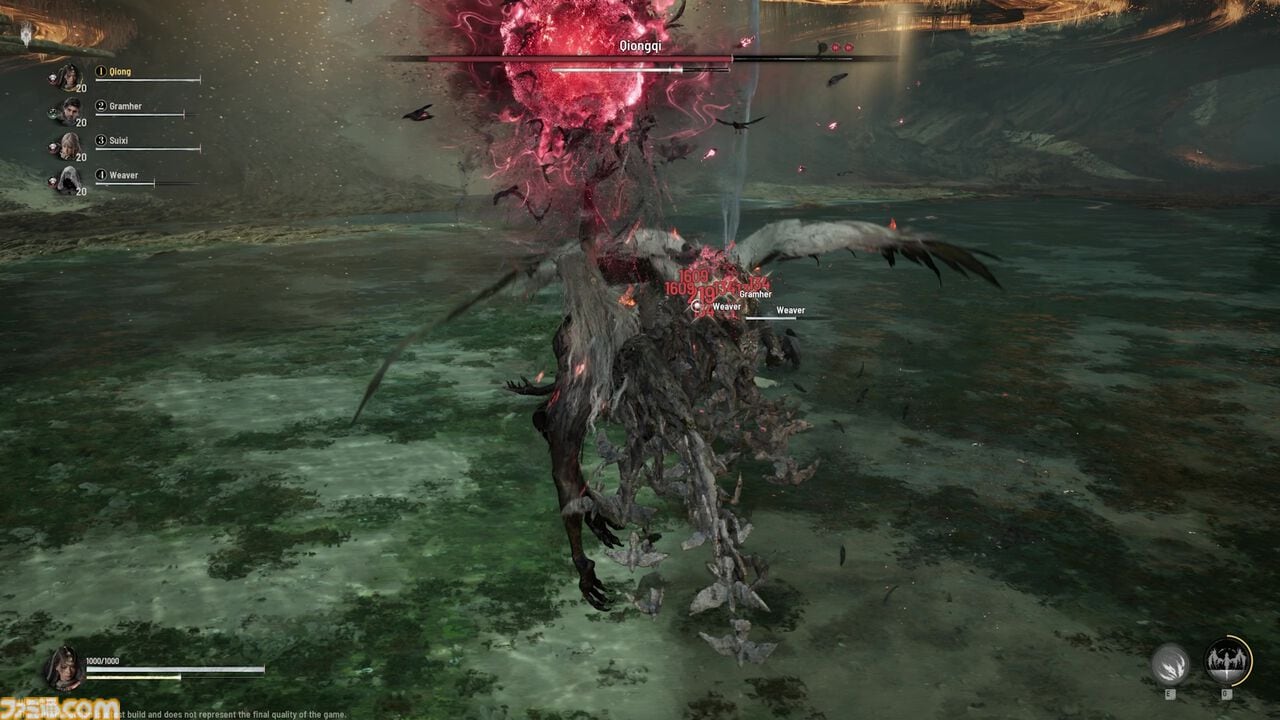
Nodusfall’s post-tutorial loop is still taking shape, but the public description makes the direction unusually clear: the hunt is the progression system. Players leave the hub, follow a contract to a Dreadnodi, fight through pressure and vulnerability, collect the result, and use that result to improve a Weaver. The official “Slay, Forge, Build, Evolve” framing is supported by coverage from PC Gamer, GameRant, Inven, 4Gamer, TechNode, and Famitsu. None of those sources has published a full endgame map, gear rarity table, or complete skill tree. This page separates the confirmed growth loop from the test questions that remain open.
The key answer is that “endgame” likely means repeated hunts of more dangerous targets, not a separate raid mode detached from the creatures. The loop is already visible in the demo chain: different Dreadnodi, escalating pressure, party execution, and power reclaimed from the fallen. Your build then changes what the next hunt asks of you. Read hunt Dreadnodi for the enemies, Divine Skills for boss-driven power, and contracts and hunts for the route that ties preparation to reward.
The post-tutorial hunt loop
The first tutorial teaches movement, a basic attack rhythm, a clash or counter concept, and the reason the hub exists. After that, the stable loop is: accept a contract, mount, follow the ground trail, identify the target, build pressure, exploit a vulnerability, defeat the Dreadnodi, and return to the hub. The board is the transition between a character-building session and a combat session. It gives the player a reason to spend materials and a reason to take the next ride.
The return matters. A successful hunt is not only a victory screen. It is the point at which the party converts enemy power into future options. Official copy says players reap divine power from enemies and use it to unlock powers that are theirs alone. That makes every major kill both a combat achievement and a progression event.
The loop also supports different kinds of play. A solo player can take a contract at their own pace, choose a safer ranged or support approach, and learn one target at a time. A four-player party can split roles, use Elemental Links, and turn a long chain into a coordinated execution. A test player who understands the loop should be able to answer two questions after every run: what did the target teach me, and what changed in my build afterward?
Hub crafting and preparation
The hub is the practical preparation layer. Preview footage shows a social space with mounts, hot springs, and a notice board. It is reasonable to use the hub for changing or checking a loadout, reviewing rewards, and deciding the next contract. The public sources do not yet show every crafting station or resource conversion, so avoid promising a specific menu layout.
Crafting should be treated as a conversion problem. A material has a purpose, and the best next hunt is one that gives the material you need while teaching a new combat pattern. Do not spend every resource on the first visible upgrade if doing so leaves the party unable to test a different style. The homepage’s “forge, build, evolve” language implies that a range of equipment and choices will matter, but exact recipes, rarity tiers, and upgrade costs are unconfirmed.
A useful hub routine is to review the contract first, then the party. If the target is a large beast, bring a clash seat and a recovery plan. If the arena has environmental elements, bring a player who can reach or activate them. If the party is practicing a new build, choose a target that supports the lesson rather than a punishing chain that hides the result. Preparation is not passive time; it determines which parts of the hunt your character can express.
The hub is also where build divergence becomes visible. Two Weavers can complete the same tutorial and leave with different regular skills, Styles, Divine powers, and target preferences. Inven’s dual-bow coverage is a useful example: two ranged players can use the same broad weapon idea while making different choices about pressure, positioning, and their Divine Skill. The exact options remain subject to the shipping build, but the principle of divergence is already visible.
Divine Skill growth
Famitsu’s description that a “divine skill grows as bosses fall” is the clearest line for this page. It is better understood as boss-driven growth than as a separate currency screen. Defeat a Dreadnodi, claim its power, and expand the personal toolkit available to the Weaver. A Divine Skill can then change the next hunt, not merely increase a statistic.
Inven and GameRant both showed long-cooldown Divine options. The bow setup included a beast-like transformation with awkward close-range attacks and tail movement, while GameRant’s Hexsworn coverage described a major healing or revival function. Those examples show two different kinds of progression value: one changes how a player moves and approaches a fight, and one changes how the party survives it. A player who chooses a Divine Skill is choosing a new problem to solve, not just a larger number.
The phrase “as bosses fall” also gives the loop a natural test. Track which target granted the power, what its attack pattern demanded, and whether the new option changed your route through the next contract. This is more reliable than guessing a hidden unlock table. A Divine Skill that helps against a dragon but leaves the party vulnerable to a rider may be powerful in one arena and awkward in another. Use party synergy to decide how the option fits the group.
No public source has confirmed whether every player receives the same reward from a shared kill, whether a Divine can be upgraded multiple times, or whether respec is available. The official wording “yours alone” supports personal ownership, but it does not establish every loot rule. Test players should record the result for each character in a party and compare them.
Gear progression and build choice
Gear progression follows the same principle. The hunt provides materials and power; the hub lets the player convert those results into a stronger or more specialised setup. The public demo footage shows a five-ability cluster, Styles, skill combinations, and loadout switching, but it does not expose a complete equipment database. Do not invent named sets, exact stat budgets, or guaranteed upgrade sequences.
A build is therefore a bundle of decisions. The weapon or Weaver determines your attack rhythm, the regular skills determine how you spend shorter cooldowns, the Divine Skill determines your long-cycle answer, and the party determines whether your plan is safe to execute. Gear is valuable only when it supports one of those decisions. A marginal stat increase that does not improve reach, recovery, or cooldown flow may be less useful than a piece that lets you contribute to an Elemental Link.
After a week of hunts, divergence should appear in practical behaviour. One player may become the frontline clash anchor. Another may prefer ranged uptime and a careful Elemental Link. A support player may choose a Divine that changes revival timing. These are not official class names; they are roles that the combat system asks the party to perform. The fact that two players can take the same bow concept and still choose different answers is exactly why a hunt game’s progression can remain interesting after the tutorial.
Higher-tier Dreadnodi
Higher-tier Dreadnodi are likely the practical endgame gate, although HoYoverse has not published a numerical tier chart. The press hands-on followed a chain from Cleaver Fellstone to Qionqi to Maldrake, with additional threats such as a rider and environmental hazards. The chain demonstrates that later targets can change the problem: one fight may reward positioning, another may demand healing, and another may test whether the party can exploit a vulnerability before the window closes.
Do not assume that a higher tier is only a larger health bar. The more important scaling may be attack timing, additional targets, arena reaction, and resource pressure. A party that defeated an early beast by ignoring the environment may reach a later target and discover that the floor, chains, lanterns, or pillars matter. A player who mastered a single-target finisher may need to learn a party execution. The Dreadnodi bestiary remains cautious about names because these are preview labels; the mechanical lesson is the chain itself.
A test team should track the target’s threat list separately from the party build. Note the primary body part, secondary target, most dangerous telegraph, useful environment object, and recovery point. Then ask whether the current gear or Divine Skill helped address that list. This turns tier progression into a learning process rather than a race to an invented number.
What endgame looks like now
The honest pre-release answer is a hunt-based progression endgame: return to the hub, compare builds, choose the next contract, mount with a prepared party, and pursue a more complex Dreadnodi. It may include repeatable routes, rankings, stronger gear, or a wider Divine roster in the live game, but those features are not yet confirmed by a public manual. The beta sign-up materials and 4Gamer hands-on footage show the loop, not a complete post-launch checklist.
For a solo player, endgame may look like learning a target safely, building a personal kit, and returning with a different plan. For a group, it may look like improving from a C-style run to an S-style run through role discipline and faster execution. Inven observed both outcomes in the same general test context, which makes coordination a visible part of progression even when the formal scoring formula remains unpublished.
What test players should track
Use a small, consistent notebook. Record the target or chain, party size, deaths, revive time, mounts, link use, Divine availability, and observed materials. Capture screenshots of the result and loadout screens whenever a test permits it. Compare two characters who used the same weapon but different Divine Skills, then compare two parties who used the same target but different roles.
Do not record guesses as facts. Label an observation confirmed, observed but unexplained, or unknown. A cooldown measured once is a test result, not a global rule. A reward seen in one video is not a drop table. This method helps the wiki stay useful while respecting the game’s pre-release status.
Nodusfall’s endgame promise is that hunting changes the hunter. The hub stores the results, bosses provide Divine growth, gear and Styles shape the expression, and the next Dreadnodi tests whether the party learned anything. The final answer is simple: prepare, hunt, harvest, return, and build a plan that is distinct from the one you brought to the previous encounter.
Frequently Asked Questions
Quick answers to the most common Nodusfall questions.
How does Nodusfall progression work after the tutorial?
The public loop is contract hunting followed by hub preparation and growth. Dreadnodi defeats provide Divine power and progression materials for forging and building a Weaver.
Do Divine Skills grow when bosses fall?
Yes, in the public Famitsu description. Defeating bosses expands a Weaver's Divine power, though the exact unlock, upgrade, and personal-loot rules are not fully published.
Is there a confirmed higher-tier endgame tier list?
No. Preview coverage shows a chain of increasingly demanding Dreadnodi, but it does not provide a public numerical tier or reward chart.
What should beta players record for progression testing?
Track target, party size, deaths, revives, link use, Divine availability, gear changes, and observed materials. Label measurements as observations until a final client is available.