
Nodusfall Party Synergy
Four players win by creating, sharing, and spending the same opening.
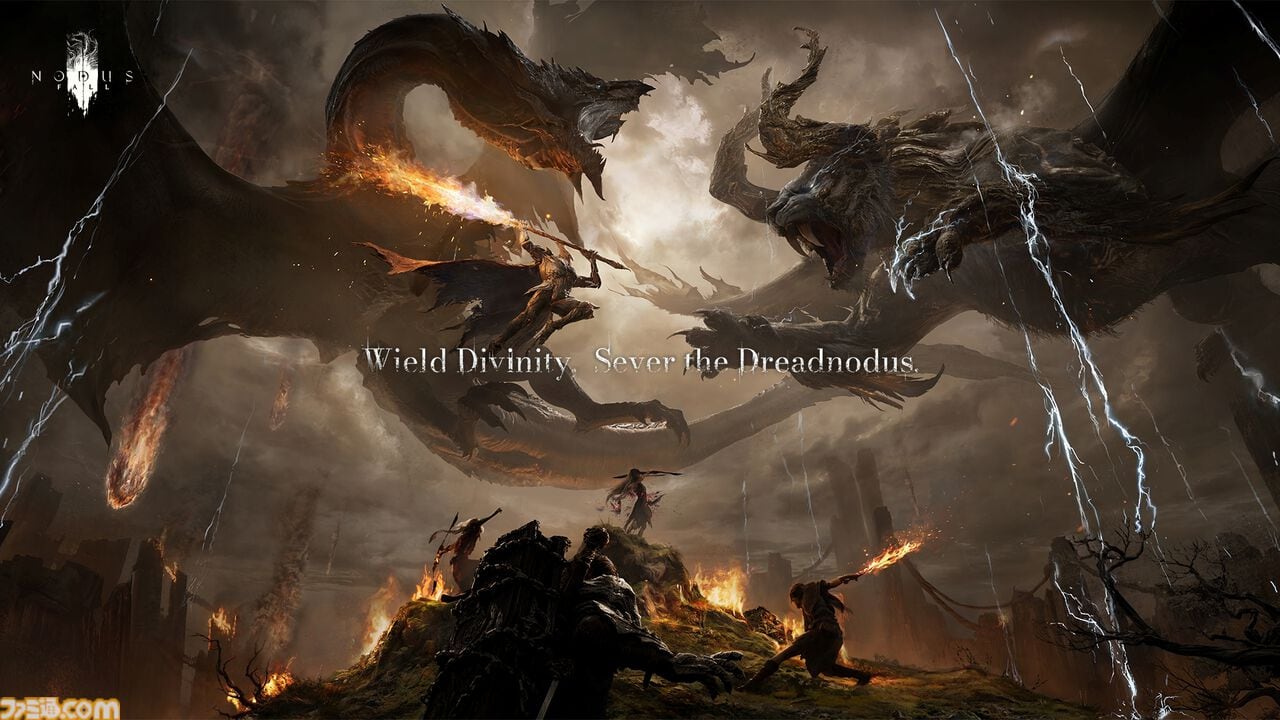
Nodusfall’s four-player party is not four people pressing damage buttons at the same monster. It is a small team that must make one opening, communicate who spends it, and then recover before the Dreadnodi closes the distance again. The developers describe combat as continuous pressure followed by a vulnerability window. PC Gamer and 4Gamer’s pre-release hands-on descriptions point to the same rhythm: clash controls danger, ranged pressure builds an advantage, support keeps the group functional, and a successful Elemental Link or party execution converts the advantage into damage.
No public source has published a complete role tree, numeric aura radius, or fixed skill rotation. This page therefore explains synergy through confirmed verbs and sensible party assignments rather than invented skill names. It is written for test players who want a reliable plan now, while leaving room for HoYoverse to change cooldowns and kit names in a future client.
Why four damage dealers can fail
A four-damage group sounds efficient until a boss makes the party choose between offence and survival. Everyone can attack the same body part, but nobody owns the route to the next opening. One player chases damage, another stands too far from the clash, a third needs healing during a dangerous phase, and the fourth is still crossing the arena when the execution prompt appears. The resulting wipe is usually blamed on low damage when the real problem is duplicated responsibility.
Four damage players can work against a forgiving target, especially when every player is comfortable with clash and movement. They become fragile when the Dreadnodi adds a rider, a wide area attack, or an environmental danger. GameRant’s Maldrake fight made the difference visible: the dragon’s area attacks and the rider’s lance pressured the group together, and the Hexsworn’s healing output finally became important. Inven’s bow demonstrations also showed that a damage role needs a plan for close-range spacing, not only a high damage number.
The answer is not to forbid damage. It is to give each damage seat a different job: one player maintains clash, one applies ranged pressure, one tracks secondary threats, and one protects the next rotation. The group can still deal damage, but its damage is sequenced around a shared goal.
Why four tanks can fail
Four tanks may survive individual hits while failing to create a fast enough vulnerability. Clash is a timing tool, not merely a defence button. If every player waits for the boss to swing, the party may spend too long reacting. If everyone charges a clash at once, the boss can punish the stack. A group needs at least one player able to hold attention and establish a safe space, but the other seats must produce pressure, healing, or target control.
A tank-heavy composition can also become predictable. Ranged or support players may be absent, so the boss has fewer reasons to move, change elevation, or expose a secondary target. The environment then becomes wasted: floating structures, reactive chains, and elemental opportunities are harder to use when nobody is positioned to reach them. Read elemental links for the environmental layer and hunt Dreadnodi for examples of multi-target encounters.
The practical tank count is one primary clash player for a standard four-player hunt, with a second player able to cover a phase or flank rather than repeating the same role. The remaining seats need a way to damage the exposed body, sustain the group, or reach a node. If four players are all built to absorb hits, ask who will shorten the fight.
The rotation triangle
The simplest party framework is a rotation triangle made of control, pressure, and recovery. Control creates space: a clash, a well-timed ranged attack, or a party action that forces a safer position. Pressure fills the space: basic attacks, skills, and Elemental Link damage reduce the time before a vulnerability. Recovery buys the next turn: healing, revival, positioning, and a deliberate use of long-cooldown Divine power.
The sides of the triangle must rotate. A clash player cannot hold the front forever; ranged pressure cannot ignore a dangerous approach; recovery cannot be treated as permission to stand still. When a side completes, hand responsibility to the next player. This prevents every player from spending the same cooldown and makes the party less vulnerable to one missed timing.
The triangle is not a named combat system from the developers. It is a planning model inferred from the demonstrated loop of pressure, vulnerability, and finish. It is more durable than a screenshot of one exact skill sequence because it works whether the current build exposes a clash gauge, a link node, a party execution, or a different official implementation.
First, second, and third-phase targeting
Bosses in the press demonstrations are multi-stage encounters. The party’s target should change as the encounter changes. In the first phase, establish the front and identify the telegraph. The clash player holds the primary body part, ranged players pressure from reachable distance, and support watches the arena rather than a health bar. A secondary rider, add, or environmental hazard should be named before it becomes urgent.
During the second phase, the group should switch from learning to converting. The primary target may move, expose a new part, or begin a sequence that creates a vulnerability. Elemental Links planted on a giant beast matter here because they give the group a reason to target a specific body area instead of blindly chasing the head. Assign a caller to say primary, secondary, or links so that four players do not independently choose different targets.
The third phase is the execution phase, but it is not an excuse to abandon the mechanics. The first prompt may be a finisher, a party execution, or another confirmed high-damage opportunity. The squad still needs a safe entry, a clear secondary threat, and enough healing to survive the aftermath. Inven’s reporting of S- and C-ranked runs suggests that time and recovery discipline matter across a full contract, not just during the cinematic hit.
Clash, ranged, and support seats
The clash seat protects tempo. Its player watches the boss’s attack, commits only when the telegraph is readable, and repositions after the counter. The ranged seat protects uptime. It stays near a usable angle, fires when the boss is exposed, and moves before a ground attack makes the old position dangerous. The support seat protects options. It tracks health, revives, marks safe recovery space, and calls whether the party should spend or save its next major action.
The fourth player can be a second pressure seat, a specialist who handles a flank, or a flexible support depending on the build and the target. GameRant described Hexsworn as apparently weak in an early encounter with little incoming damage, then important once the Maldrake and rider fight made healing necessary. That is a useful warning against judging a support build by an easy first phase. Inven’s dual-bow setup is the opposite example: two ranged players can multiply pressure, but they still need someone to control the approach and a plan for a dangerous close range.
Aura stacking should be approached with the same restraint. Public coverage confirms healing and revival functions in the co-op loop, but it does not publish a complete list of aura effects, stacking rules, or exact radii. Test players may observe whether two support effects overlap, cancel, or extend one another, but they should report that observation as build-specific evidence. Do not write a community testing result into a universal guide as though it were official.
Calling a join-execution
A join-execution is a communication event. The starter identifies the prompt, announces that it is starting, and moves into the required position. The rest of the party confirms the target, clears the secondary threat, and joins only when the prompt is available. A simple call sequence works:
- Mark: name the body part and the threat.
- Set: clash player holds space while ranged players stop premature damage.
- Call: say “execution now” or “hold execution” before committing.
- Join: all available players enter the prompt together.
- Recover: reassign positions immediately after the animation.
The caller should not be the only person who knows the plan. In a random group, repeat the target and the join condition in chat before the fight. If the party cannot agree, a single-player finisher may be safer than forcing four players into a bad position. The goal is to spend the opening, not to prove that every player knows the same shortcut.
Matchmaking etiquette
Before mounting, state whether you are learning the fight, testing a build, or chasing a faster clear. Ask for roles without demanding a specific meta. A new player should say so; an experienced player should explain one mechanic at a time. If someone is disconnected, do not turn a temporary absence into a public accusation. Mark the revive point and keep the next attempt simple.
After a wipe, name the cause in order: positioning, healing, link use, target order, or a missed execution. Avoid four separate damage parses while the boss is still moving. Screenshot the result and compare party data after the run. A good matchmaking group leaves the next lobby with a clearer plan than the one it brought in.
Party synergy is therefore a practice of responsibility. The developers have shown the ingredients, but not every final number. Use the rotation triangle, assign distinct seats, change targets by phase, and make the execution call before the prompt disappears. The strongest group is not the one with four identical builds; it is the one whose four different responsibilities meet at the same vulnerability window.
Frequently Asked Questions
Quick answers to the most common Nodusfall questions.
What is the best four-player party composition?
No official fixed composition is published. A reliable test setup assigns clash control, ranged pressure, support or recovery, and a flexible secondary role.
Does a party need a dedicated healer?
The preview supports the value of a Hexsworn or other support seat when damage becomes multi-target and sustained. Exact healing requirements depend on the build and hunt.
Can two bow Weavers work together?
Yes. Inven demonstrated a dual-bow setup, but the party still needs a plan for spacing, close-range danger, secondary targets, and joining executions.
How should a group call a party execution?
Assign a caller, name the target and secondary threat, confirm the prompt, join together, and immediately reset positions after the animation.